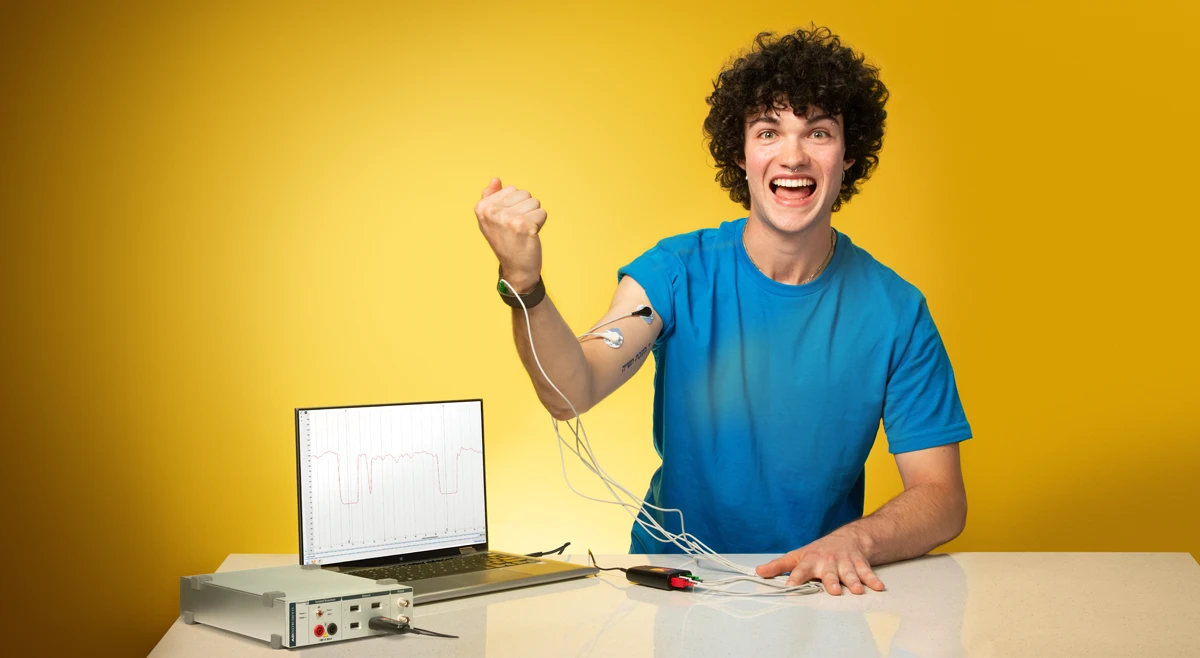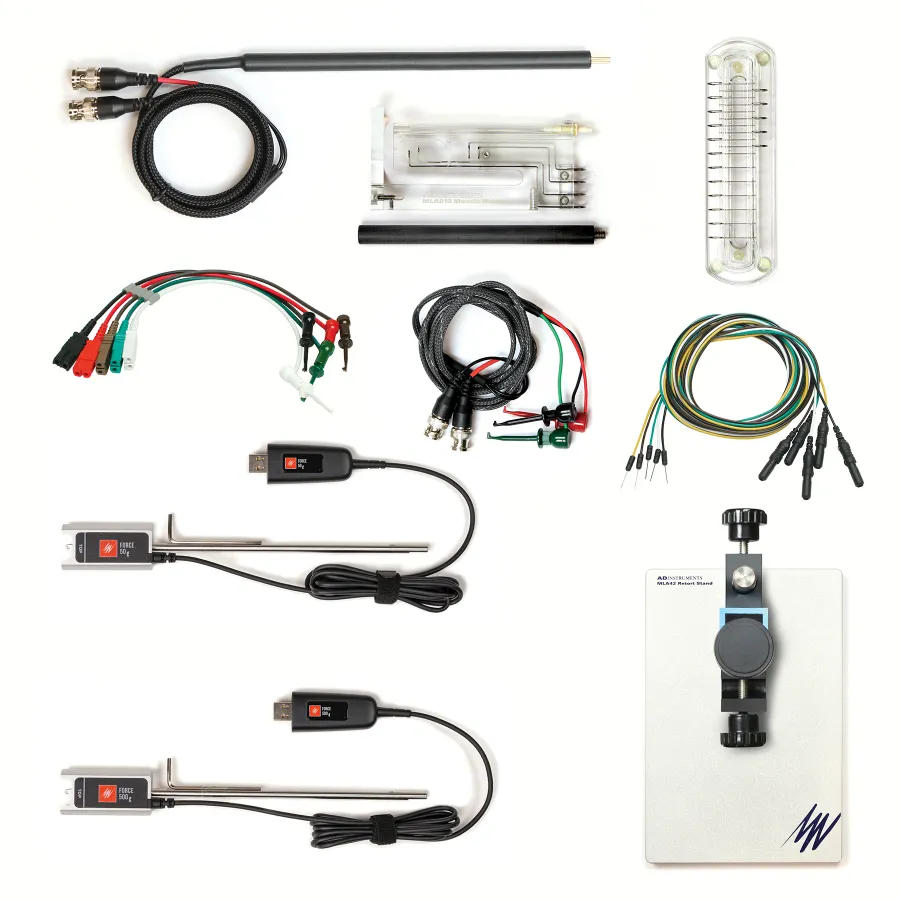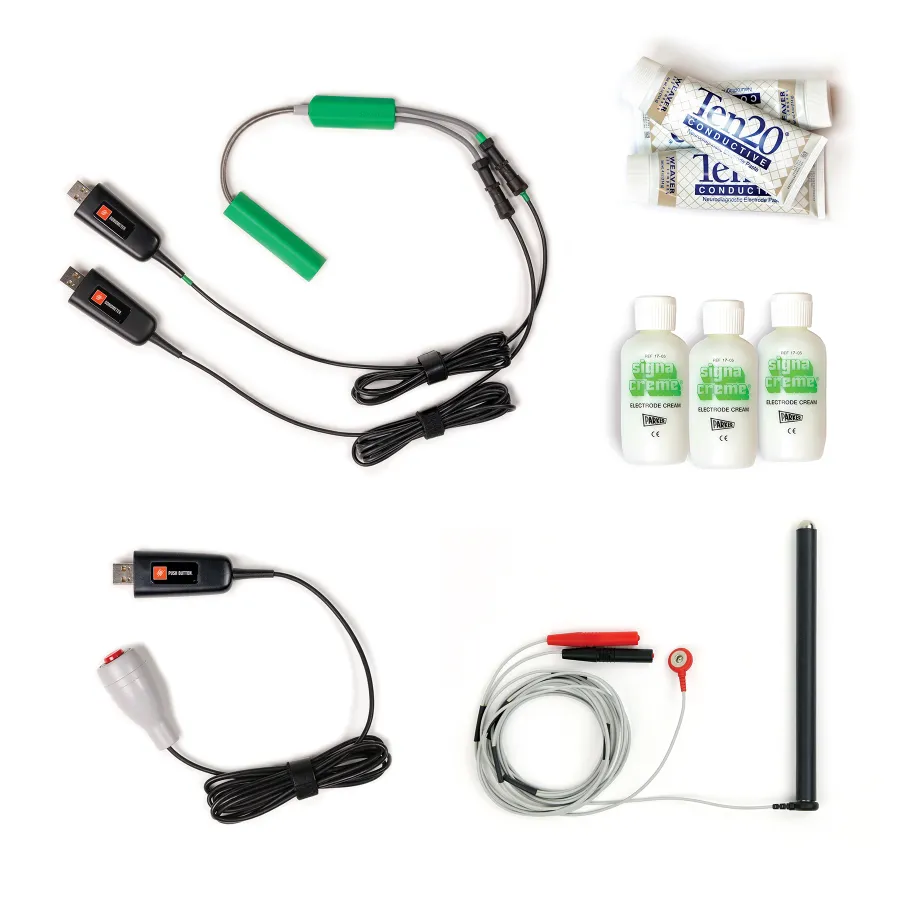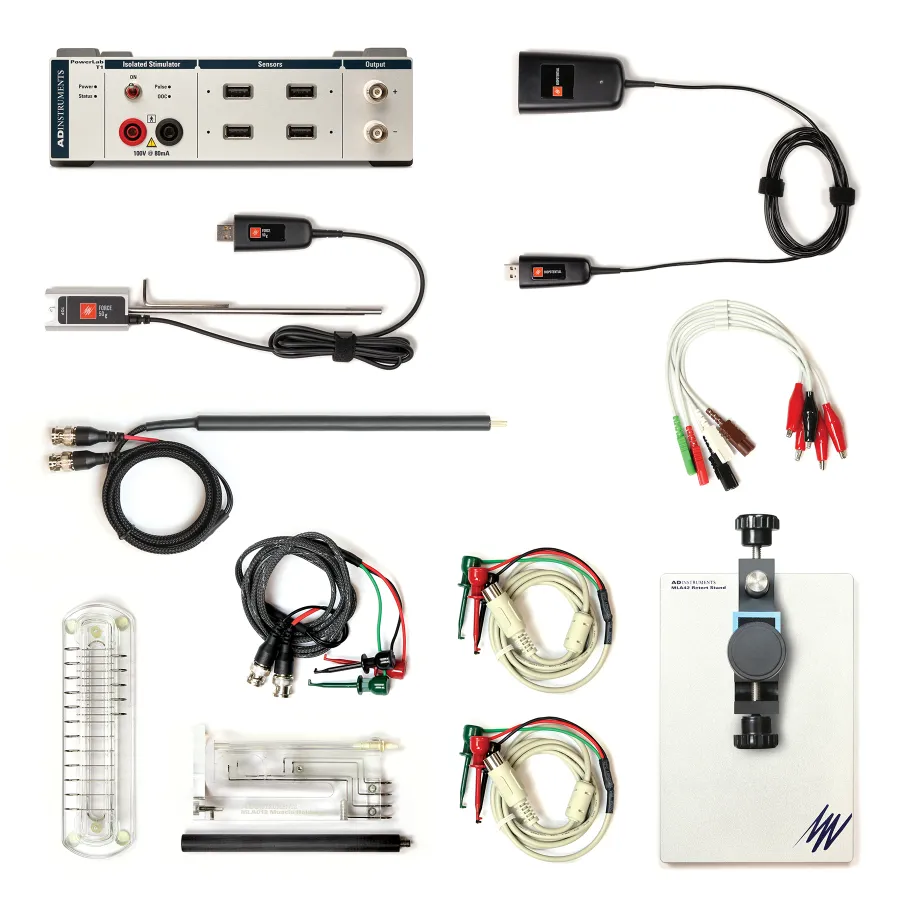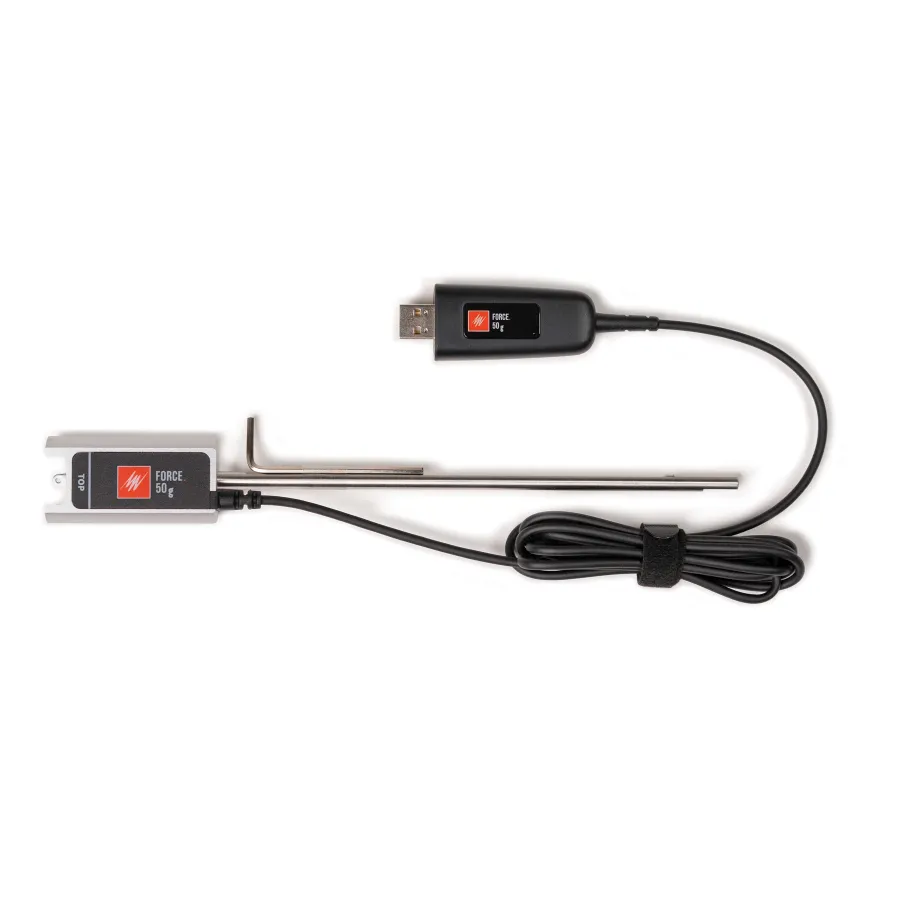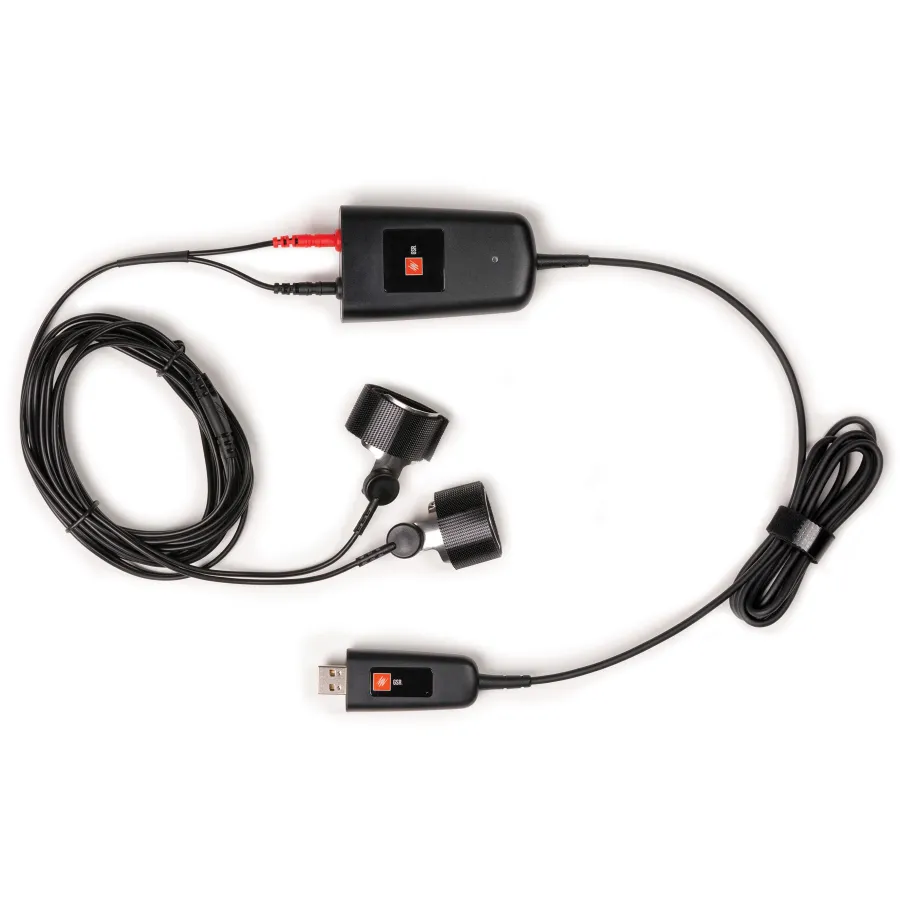
PowerLabセンサーは、LtサービスやLt LabStationで生理学的信号を迅速かつ簡単に記録できるようになることで、学生自ら学びができるようになります。

 動画を再生

パワフルかつ柔軟なパッケージにすべてを入れました

PowerLabセンサーはLtサービスLt LabStationとシームレスに統合し、学生のエンゲージメントと理解を高めるアクティブラーニングプラットフォームを形成します。

PowerLabセンサーを当社のオンライン学習プラットフォームのLtと組み合わせる:
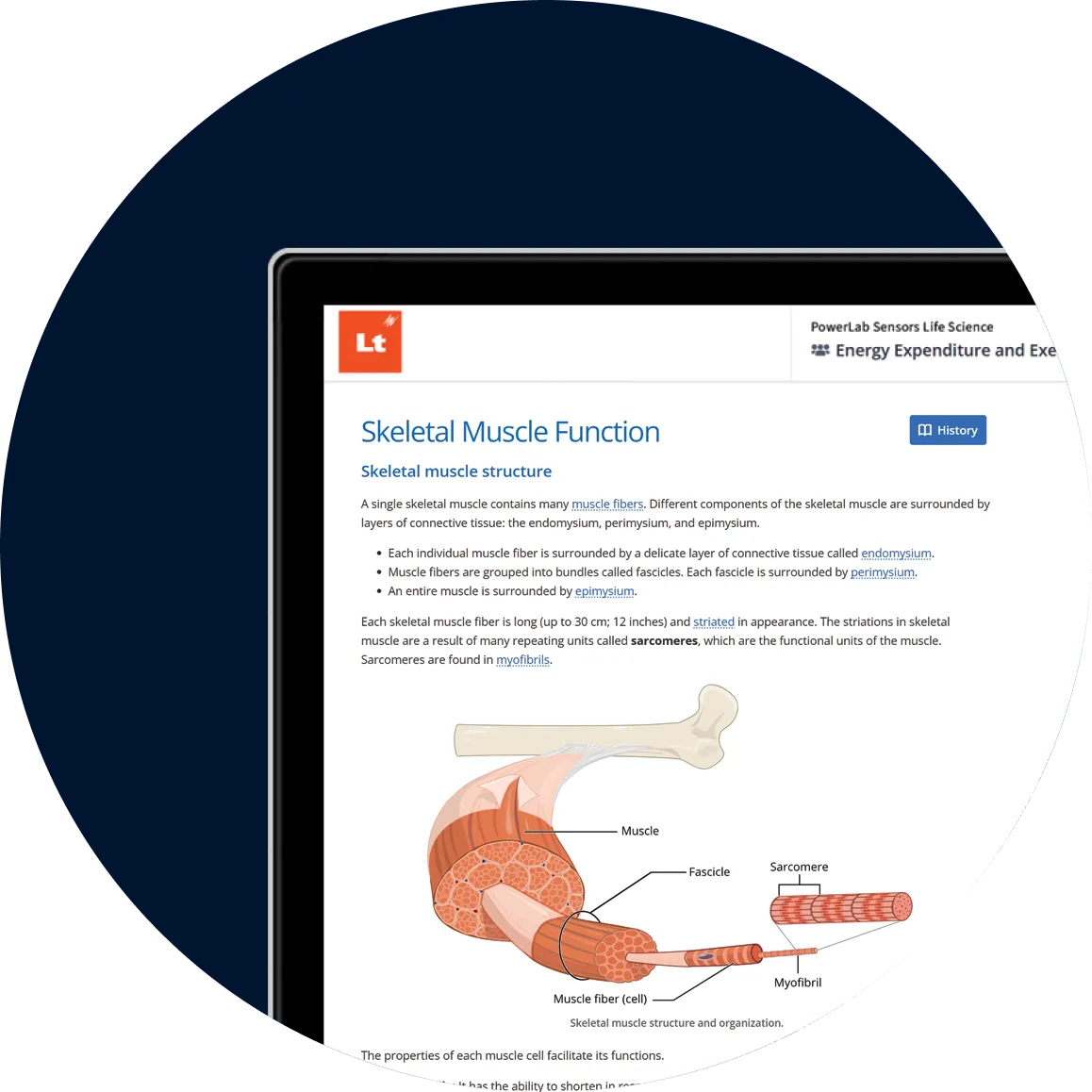
 

Lt オンライン学習プラットフォーム

900以上の
完全に編集可能なレッスン

自由自在にカスタマイズできるコンテンツ

先生方の教育スタイルをサポートできるよう、高品質なコンテンツ、画像、実験を備えた既製のレッスンをカスタマイズすることでコースを簡単に作成できます。
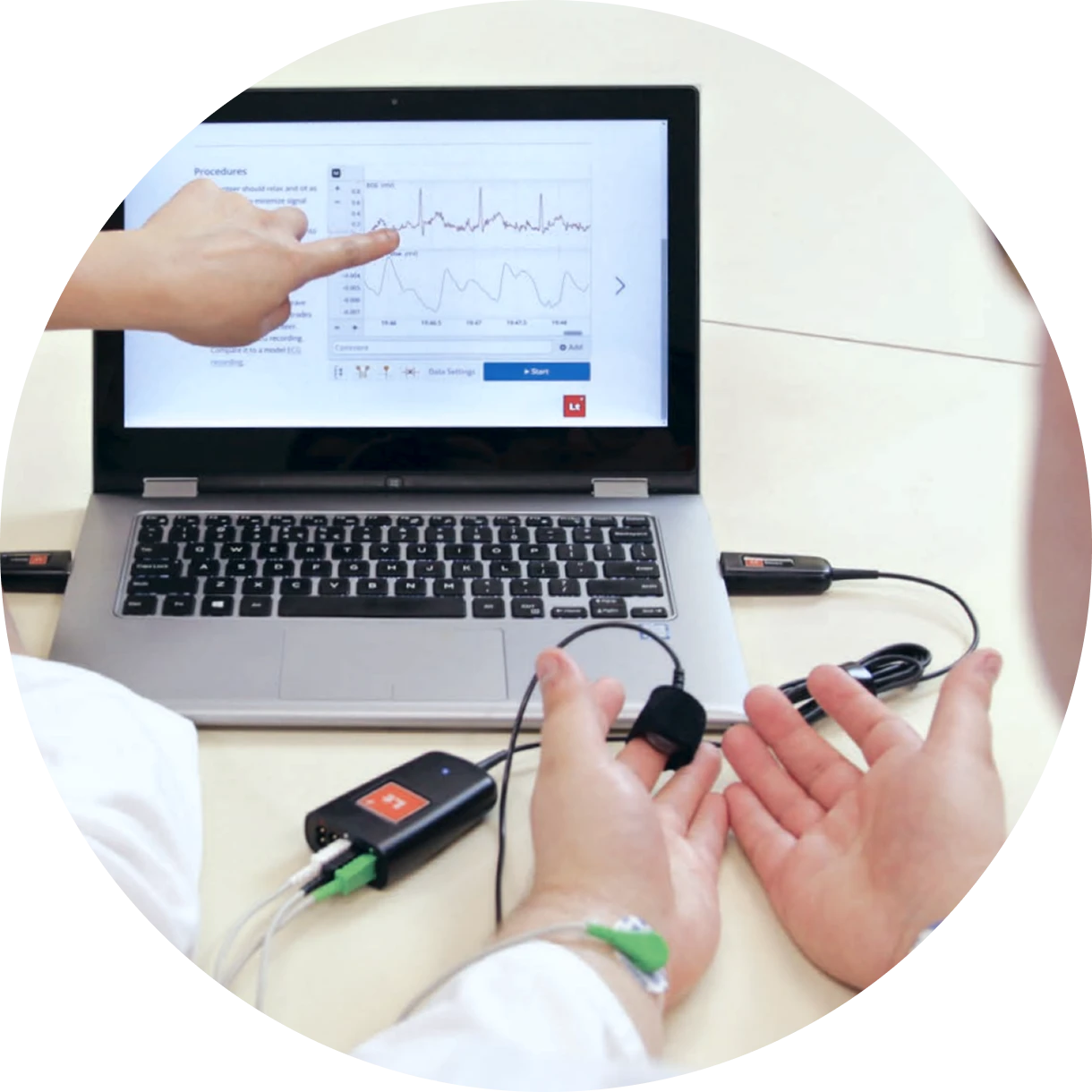
 

Lt ヒト生理学コレクション

USBで
接続

使いやすく、一貫した環境

接続してLtに直接記録できるように設計されたPowerLabセンサーは、実習室でのセットアップ時間を最小限に抑え、学生がすでに慣れ親しんでいるデジタル環境で完結します。
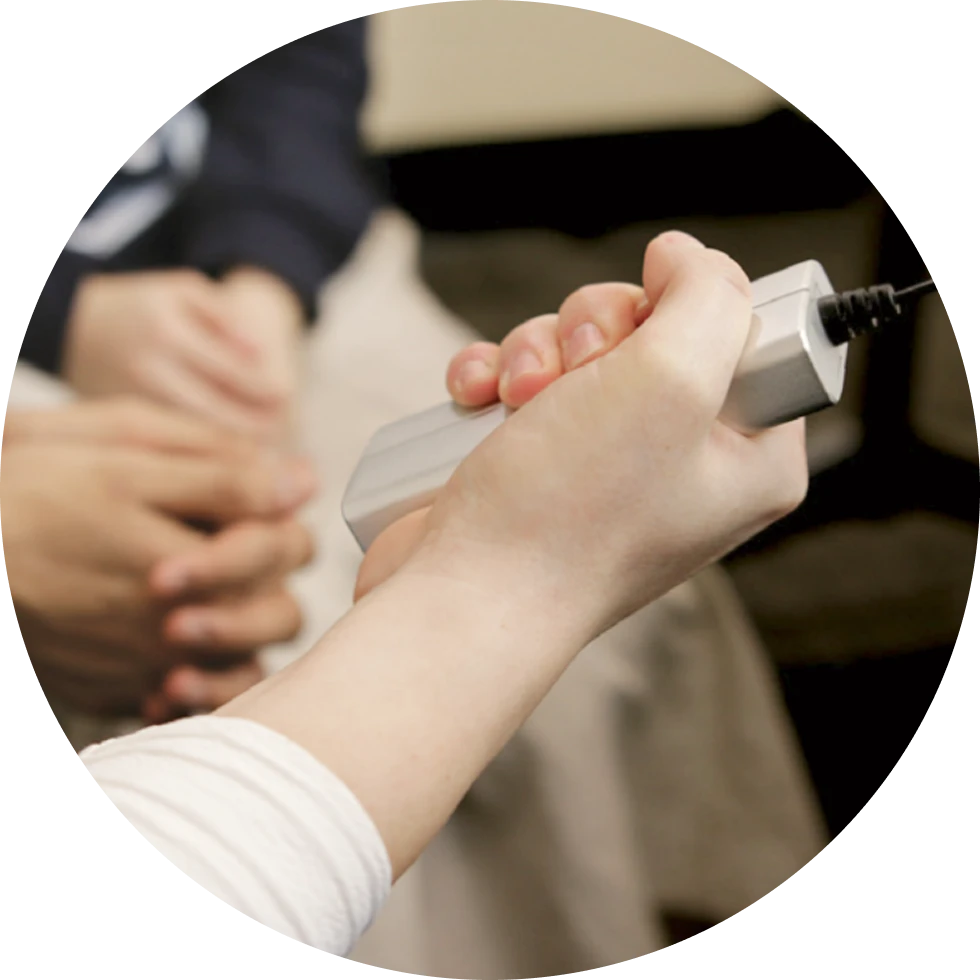
 

PowerLabセンサー

あらゆる場所を
実習室に

どこでも学べる

PowerLabセンサーのシンプルなUSB接続と、Ltのクラウドベースの学習プラットフォームを組み合わせることで、どこでもプラグインして信号を記録できます。


PowerLabセンサーのセットと機能

PowerLabセンサーは単品のほか、基本/アドバンスセットをご用意しております。

コースで必要な場合はさらに多くのセンサーキットを利用できます。


基本セット

PowerLabセンサー コアバンドル

機能:

19の講座
10の生体信号

+対応する実習内容を見る

基本セットで広範囲の生体信号を分析できます。6 種のセンサーに加えてPowerLab T1 と、Lt ヒト生理学講座で必要なLt 消耗品およびセンサー関連の付属品が含まれています。

対応するLt サービス講座と信号

19の講座
10の生体信号

+対応する実習内容を見る

アドバンスセット

PowerLabセンサー アドバンストバンドル

機能:

27の講座
13の生体信号

+対応する実習内容を見る

アドバンスセットではPowerLab センサーシリーズが取得できる全ての生体信号に対応します。9 種のセンサーに加えてPowerLab T1 と、Lt ヒト生理学講座で必要な消耗品およびセンサー関連の付属品が含まれています。

対応するLt サービス講座と信号

19の講座
13の生体信号

+対応する実習内容を見る


パワフル

学生を力づけるアクティブラーニングツール。

柔軟

ラボ内でも、屋外でもデータを記録。

正確

未来の科学者を育てるための研究品質のセンサー。

耐久性

過酷な実習環境と学生の繰り返しの使用に耐えるよう構築されています。

本物

目の前で記録される実際の生理学信号。

PowerLabセンサーを使用して学生をアクティブラーニングに参加させる

10種類の高度なPowerLabセンサーはWindowsまたはmacOS®デバイスのUSB接続を介して、直接Ltに接続します。学生はPowerLabセンサーを使用して自分自身の生理学的信号をリアルタイムで記録/分析し、ECG/EKG、EEG、EMG、EOG、スパイロメトリー、呼吸数、および指脈波の実験のために実際のデータを収集します。こうして主体的に実験を進めることで、学生がLtのヒト生理学ラボを通じて生理学の概念を素早く理解するのに役立ちます。

「USBスタイルのセンサーへの移行は素晴らしいアイデアです。私の学生たちは、特別なオペレーターを必要とする複雑な『ボタンとノブが付いた箱』の装置を操作することに、もはや不安を抱いていません。彼らは接続してすぐに始められます!」

Burhan Gharaibeh博士
ピッツバーグ大学 生物科学 准教授
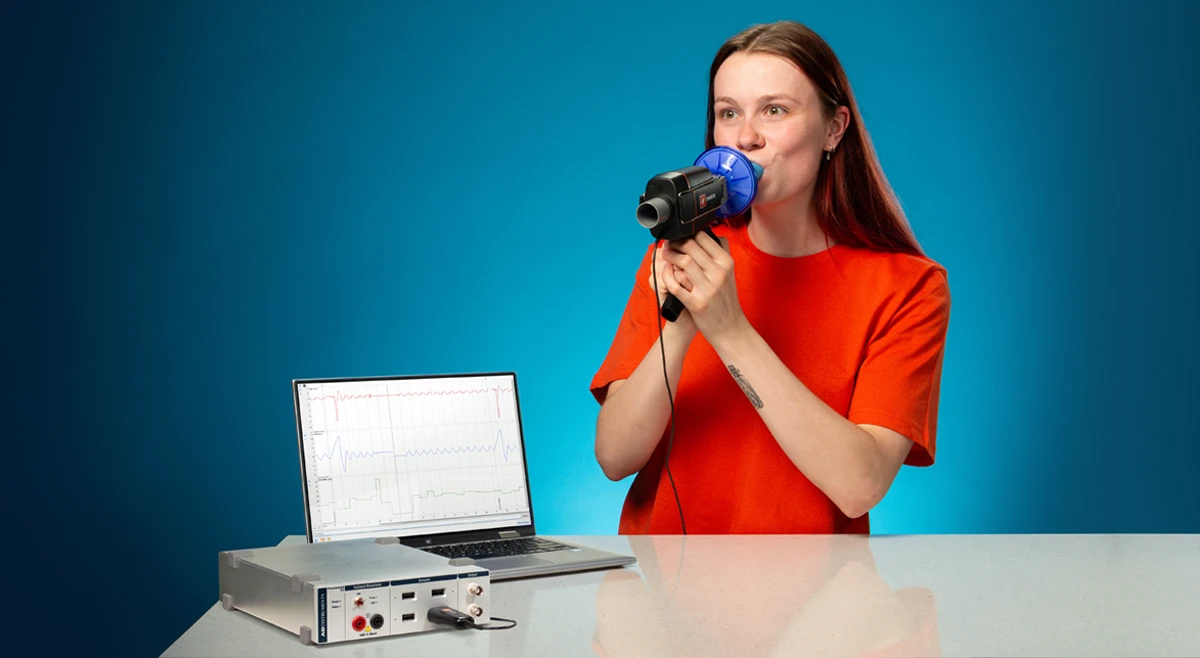
PowerLabセンサーをLt学習プラットフォームとシームレスに統合する

ADInstrumentsのPowerLabセンサーは、ライフサイエンスや医学の分野において世界中で使用されているクラウドベースの教育システム、Lt学習プラットフォームへ直接接続できるため、解剖学、生理学、運動科学などのコースにおける実践的でデータ主導のレッスンに最適です。プラグアンドプレイ設計により、インストラクターはリアルタイムのデータ記録を伴う実践的なラボを構築でき、学生はログインしてレッスンを完了し、質問に答え、自分自身のデータ結果を確認できます。この統合により、対面式ラボとリモート学習の両方の環境がサポートされ、セットアップ時間が短縮されると同時にエンゲージメントが向上します。

「使いやすく、無駄がありません。[PowerLab]センサーにより、学生はハードウェアのセットアップではなく、学習に集中できます」

Mike Gill博士
オタゴ大学 生理学 プロフェッショナルプラクティスフェロー
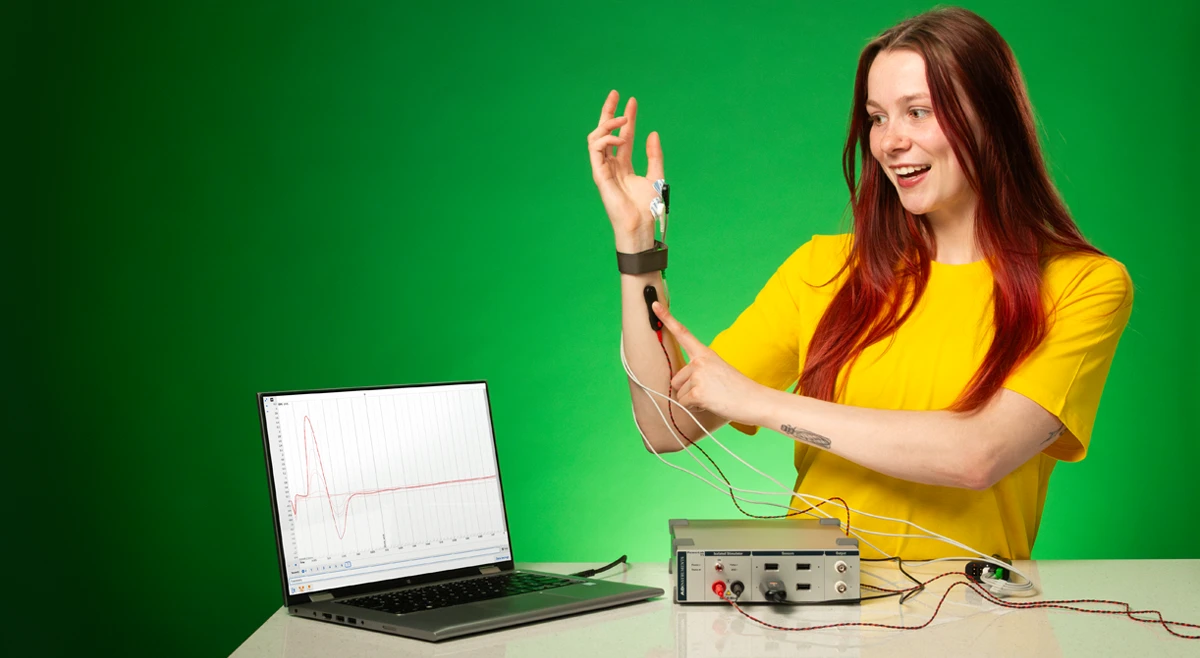
強力的かつ正確

PowerLabセンサーはヒト生理学のコースで新しいハードウェアや追加のハードウェアを必要とする教育者に最適です。学習プラットフォームであるLtとともに、これらのセンサーは学生に本物のラボ体験を提供する統合データ収集ソリューションであり、同時に対面学習とリモート学習の間の柔軟性も可能にします。

「より実践的でインタラクティブだったので、センサーの使用は本当に楽しかったです。これにより、自分がやっている作業に間違いなくより没頭することができました…心電図(EKG)、パルスオキシメーター、温度計などを実践的に操作できたことで、コースの内容に対する理解がこれまでとは違うものになりました」

生理学の学生
ノースカロライナ大学ペンブローク校


PowerLab T1

ライフサイエンスの教室での実験に理想的なデータ収集ソリューション。PowerLab T1は、データの正確性と信頼性を維持しながら、過酷な使用に耐えるように設計されています。高品質のデータ収集、複数のセンサーを使用する際の中周波信号の同期、最大10ミリ秒間の絶縁された100V 80mAの刺激により、学生に研究レベルの経験を提供します。
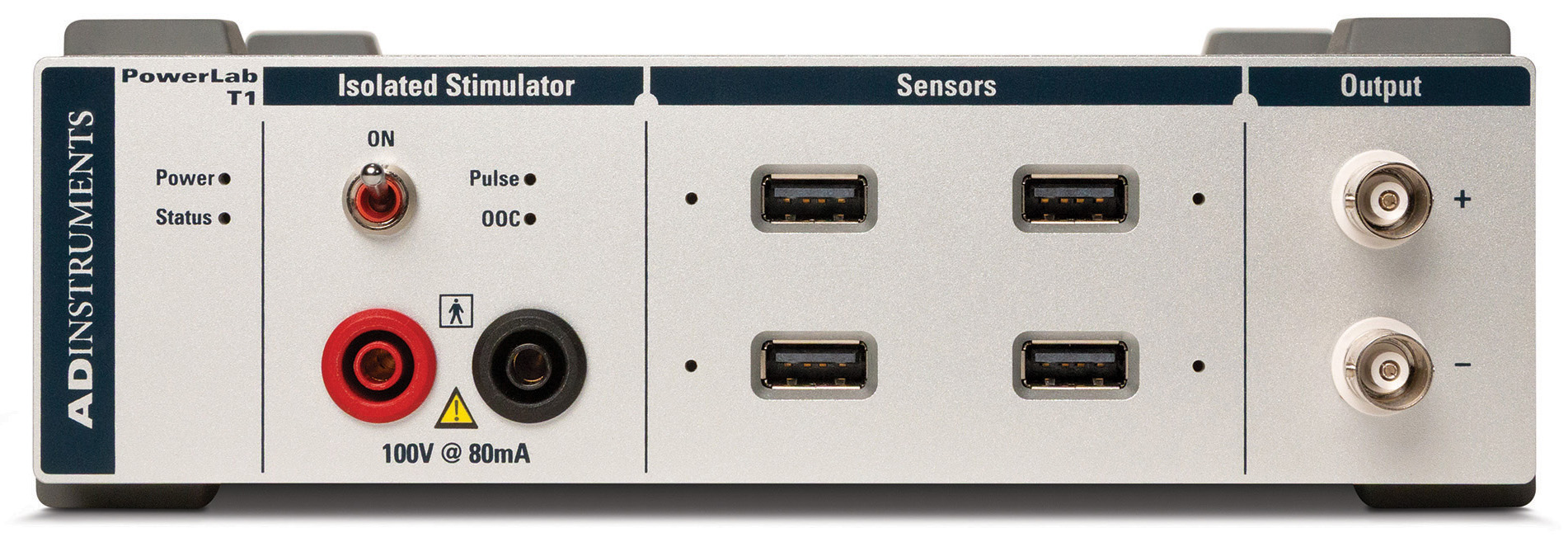
PowerLab T1


あなたのラボに適合するソフトウェアソリューション

PowerLabセンサーはLtおよびLt LabStationとシームレスに統合されます。センサーを接続するだけで、選択したソフトウェアで記録を開始できます。

さらなる柔軟性を提供するために、LabChartとの互換性は現在開発中です。
Lt

Ltサービス

Ltサービスはライフサイエンス、看護学、および医学向けのすぐに使えるコンテンツを備えたオンライン学習プラットフォームです。900を超えるインタラクティブで完全にカスタマイズ可能なレッスンが利用可能です。学生がリアルタイムで生理学信号を記録および分析できるようにLtサービスとPowerLabセンサーを組み合わせることで、実験を通じて理論を強化します。

Lt LabStation

Lt LabStationは、オフライン環境で学生が取り組むためのインタラクティブなレッスンを作成できるラボベースの学習プラットフォームです。150を超える完全に編集可能なラボレッスンも利用できます。学生はPowerLabセンサーとLt LabStationを使用して生理学信号を記録および分析し、実験を通じて理論を強化できます。

PowerLabセンサーバンドルとLtのヒト生理学コレクションを使用して、どんな実習を行うことができますか?

Include Bundle:
Include Sensors:

Airflow

Record spirometry signals and analyze these to derive dynamic respiratory parameters, such as forced expired volume in 1 second (FEV1). Compare these with parameters derived from a simulated airway restriction exercise. Students also learn how to perform peak flow tests to assess pulmonary function.

Products Required: PowerLab Sensors Spirometer

Autonomic Nervous System

Complete the same exercises as performed in a clinical assessment of ANS function. Examine the effects of nerve stimulation and other stimuli on skin potential. Investigate heart rate variability with normal and deep breathing. Observe the physiological effects of the Valsalva maneuver and of rapid postural change. Finally, perform pupillary exercises.

Blood Pressure

Learn how to measure blood pressure with a stethoscope, blood pressure cuff and sphygmomanometer, then visualize changes during a measurement with a Cardio microphone. Assess peripheral circulation changes with a finger pulse transducer. Then examine the effect on blood pressure in the arm with changes in cuff location, cuff size, and arm position. Finally, ask how leg position affects leg blood pressure.

Body Temperature

Learn how to measure body temperature at a variety of sites, how to avoid common errors in measurement, and how to interpret alterations in body temperature. Explore the differences between conductive and convective heat loss with a Thermistor Pod and temperature probe.

Brain Structure and Reflexes

Refresh your knowledge of the major structures of the human brain and view MRI and CT scans. Test the knee and ankle jerk reflex responses with and without the Jendrassik maneuver. Students will also assess their pupillary and plantar reflexes.

Breathing

Students record breathing movements with a respiratory belt transducer to investigate various aspects of breathing, including the ability to hold the breath and the relation between breathing and heart rate.

Cardiorespiratory Effects of Exercise

Record an ECG, blood pressure, and respiratory movements from a healthy volunteer, and compare the recordings made when the volunteer is at rest, during exercise, and immediately after exercise. Students will examine which factors control heart rate, blood flow, and ventilation before, during, and after exercise.

Cardiovascular Effects of Exercise

Record an ECG and the finger pulse from a healthy volunteer, and compare the recordings made when the volunteer is at rest and immediately after exercise. Students will examine the factors that control heart rate and blood flow to tissues before, during and after exercise.

Cold Pressor Test – Mini Lab

Measure blood pressure by auscultation and carry out the cold pressor test. Use a blood pressure sensor and a finger pulse sensor to measure blood pressure, heart rate, and pulse amplitude continuously whilst observing a bodily extremity's reaction to extreme cold.

Diving Response

Investigate the effects of the diving response on heart rate and peripheral circulation in humans during simulated dives as well as breath holding.

Electroencephalography (EEG)

Students explore the electrical activity of the brain. They record electroencephalograms, and analyze: the effect of various interfering signals; the changes to alpha and beta waves with eyes open and shut; and the effects of mental and auditory activity on alpha and beta waves.

Electrogastrography (EGG) – Mini Lab

In this lab, students measure the electrogastrogram (EGG, gastric myoelectrical activity) of a volunteer in a fasted state followed by a fed state. Students compare the frequency and amplitude of gastric waves before and after eating.

Electrooculography (EOG)

In this laboratory students record electro-oculograms (EOG’s) in the horizontal plane. They will examine different eye movements including: angular displacement, saccades, smooth tracking, gaze-holding and gaze-shifting, and nystagmus.

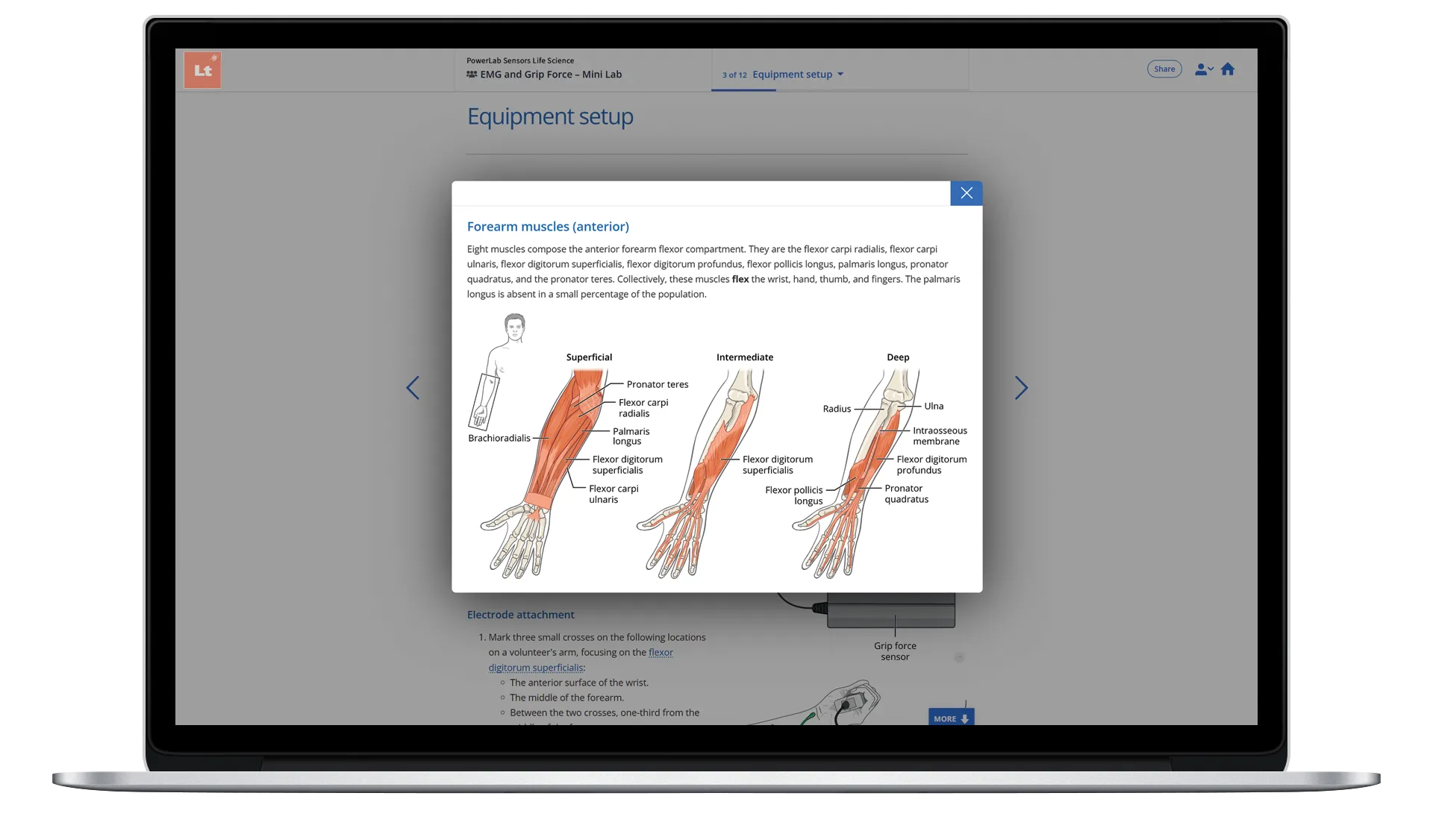
EMG and Grip Force – Mini Lab

In this mini lab, students use surface electromyograms (EMGs) and a grip force sensor to examine the relationship between electrical activity and force during several muscle fatigue activities.

This lab contains the same muscle fatigue activities as the Muscle and EMG lab, with the addition of EMG. The mini-lab could be used as a stand-alone activity, or as a substitute for some activities from the Muscle and EMG lab.

Energy Expenditure and Exercise

Heart and ECG

Measure and analyze the ECG and pulse, and discuss the relationship between them. Compare variations between the different leads of a 12-lead ECG and then perform an Einthoven triangle analysis (ECG example data provided).

Heart and Peripheral Circulation

Examine the direction of blood flow in the veins through a series of occlusion exercises. Practice palpation techniques on arm and leg arterial pulses. Record the radial pulse and discover arterial anastomoses and the connections in the blood supply of the hand.

Products Required: PowerLab Sensors Finger Pulse

Heart Sounds

Listen to heart sounds via a stethoscope by performing auscultation on a volunteer. Record and analyze an ECG in conjunction with a phonocardiogram (PCG) and pulse measurements.Investigate the timing of ECG events and peripheral pulse relative to heart sounds, to determine their relationships.

Hoffmann's Reflex

Stimulate the tibial nerve to measure the Hoffmann's reflex. Determine how the latency and amplitude of the M-wave and H-reflex change under different conditions.

Hyperventilation and Rebreathing – Mini Lab

In this lab, students will use a spirometer sensor to compare how the respiratory rate and expired volume of gas change in response to hyperventilation and rebreathing expired air, in comparison to normal breathing. They will perform breath holds after each breathing pattern and correlate differences in breath hold duration with the proportion of CO2 in the blood.

Products Required: PowerLab Sensors Spirometer

Lung Volumes

Record and analyze spirometry signals to derive static respiratory parameters, such as lung volumes and capacities. Perform basic tests of pulmonary function and simulate breathing with hyperinflated lungs.

Products Required: PowerLab Sensors Spirometer

Mechanics of Ventilation

Examine mechanical properties of the lung and chest wall by measuring pressures generated passively and by contraction of expiratory and inspiratory muscles.

Muscle and EMG

Record EMG during voluntary muscle contractions and investigate how coactivation and contractile force changes with increasing demand. Measure the decline in your Grip force during a sustained contraction and examine muscle fatigue. Discover how visual feedback, verbal feedback, and rest, impact our ability to sustain muscle contractions.

Myotatic Reflex – Mini Lab

Trigger the myotatic reflex on a volunteer by stimulating the patellar tendon. Observe the effects of the Jendrassik maneuver on the myotatic reflex.

Peripheral Nerve Function

Record an evoked EMG following electrical stimulation of the median or ulnar nerve at a variety of stimulating currents. Calculate latency and nerve conduction velocity.

Reflexes and Reaction Times

Students explore the similarities and differences of reflexes and reactions. Students first examine simple reflexes, and then use the PowerLab to examine their reaction times to stimuli under different conditions.

Respiratory Sinus Arrhythmia (RSA) – Mini Lab

In this mini lab students will evaluate the magnitudes of heart rate variability due to different types of respiration (normal, fast, and deep) using a respiratory belt sensor and biopotential sensor.

Skeletal Muscle Function

Refresh your memory of the basic types of contractions. Record and measure muscular twitch responses to nerve stimulation and observe recruitment as stimulus strength increases. Test the effects of stimulus timing on muscle twitch summation and tetanus.

Stroop Test

Students will familiarize themselves with the Stroop Test. They will investigate the interference of conflicting messages, and examine the effects of the Stroop Test as an experimental stressor. This lab is suitable for students at all levels.

Thermoregulation – Mini Lab

Compare the distribution of sweat glands on a volunteer’s hand versus their arm using Lugol’s iodine. Additionally, use a temperature probe to measure the heat released through vasodilated capillaries during exercise. This is a short lab that could be used as a stand-alone activity, or be combined with other related labs such as the Body Temperature and Cardiovascular Effects of Exercise labs.

Try adding a bundle or more sensors to see which labs you can teach.

Auditory System – Mini Lab

In this lesson, students will use a tuning fork to conduct Rinne and Weber tests, and perform a modified audiometry test to determine their hearing threshold for different sound frequencies.

Blood Clotting

This module contains tutorials covering components of blood, blood cell formation, blood type, hemostasis, and breakdown of blood clots. In the lab, learners collect their own ​blood samples via sterile ​lancets to assess bleeding and coagulation time. They will also dilute a blood sample and use a hemocytometer to perform a platelet count and calculate the number of platelets per μL of blood.

Blood Counting

This module contains a tutorial covering components of blood, blood cell formation, and blood type. In the lab, learners collect their own finger prick blood samples to complete a variety of tests. First, students will prepare a blood smear and identify different blood cells under a microscope. Next, students will determine the hemoglobin concentration of their blood sample using a spectrophotometer and perform a hematocrit test. Finally, students will determine their blood type using Eldon Cards.

Endocrine Physiology

The focus of this virtual lab is to explain the basic functionality of the endocrine system, using three endocrine systems as examples: the stress axis (HPA), reproductive axis (HPG), and the metabolic axis (HPT). In the lab, students learn about hormone feedback loops with real-life scenarios. Next, an interactive activity encourages students to use their critical thinking skills to identify a hormone that was administered to a “virtual” rat by analyzing changes in the animal’s organ weights. Students also encounter a simple clinical example of hormone profiles. In the Preclinical Medicine Collection, students also work through a case study on growth complications.

Glucose Absorption

Students investigate how the gut and kidneys handle a carbohydrate load of either glucose or starch. They will eat or drink a variety of substances, then collect their urine and finger-prick blood samples to measure the glucose levels over time.

Kidney and Urine

Estimate your own bladder capacity, update your knowledge of kidney anatomy and view an abdominal CT scan, and perform urine testing on “patient” urine samples, and urine observation.

Mechanical and Chemical Digestion

In this lab, students will explore the effects of mechanical and chemical digestion on the breakdown of three different food substances that represent the macronutrient classes: carbohydrate, protein, and lipid. Student groups will use a simplified lab setup to simulate the processes of mechanical and chemical digestion to determine how important each is in the overall digestive process.

Reproductive Physiology

Learn how reproductive anatomy develops at birth and how it matures and responds to puberty. Investigate how the hormones of the hypothalamic-pituitary-gonad axis interact with reproductive organs in both the testicular and ovo-uterine systems. Explore hormonal control of the menstrual cycle in the ovo-uterine reproductive physiology lab and perform sperm count and motility measurements in the testicular reproductive physiology lab.

Sensory Illusions

Over a series of exercises students investigate mechanisms of sensory perception and discover techniques that send conflicting information to the central nervous system.

Sensory Physiology

Students familiarize themselves with their senses and experiment with sensory illusions. Learn how the body detects and perceives different sensations including touch, sight, taste, and movement. These activities are suitable for students at all levels, and can be performed without hardware.

Water Balance

Learn how the kidneys handle fluid loads. See how urine output and urine specific gravity differ after consuming isosmotic, hyposmotic and hyperosmotic solutions.

アドオンセンサーとキット

Ltコンテンツコレクション

FAQ、詳細、および技術仕様

Ltセンサーを使用していますか?「LtセンサーからPowerLabセンサーへの移行に関するFAQ」をご覧ください。

現代の医学生理学実習に合わせて設計されたADInstrumentsの次世代ハードウェアです。この拡張されたラインナップはご期待に添えるようプロフェッショナルグレードのデータの完全性と、セットアップを容易にする、新しく柔軟なUSB-Aデザインを併せ持っています。すべてのデバイスは強力で信頼性が高く、そして何よりも、学生の毎日の過酷な使用に耐えられる耐久性を備えており、トラブルシューティングより教育に集中できるよう設計されています。

ワイヤレス技術は一部の状況では理想的であり、当社のKaha Telemetryシリーズの形でワイヤレスの研究ソリューションを製造しています。しかし、ワイヤレス技術は一貫性があり、単一の目的に焦点を当てたラボ環境で最もよく機能するのに対し、PowerLabセンサーは、必要なときに必要な場所で使用されることを意図しています。

PowerLabセンサーが有線センサーとして開発した理由は主に2つあります。第一に、最小限のハードウェアと最短のセットアップおよび片付け時間で最高品質の生理学的信号を最適化するためです。そして、学生がセンサーを研究機器として十分に関与するよう促すためです。

PowerLabセンサーを有線の生理学センサーとして設計することで、他のワイヤレスデバイスからの干渉を排除しながら、追加のハードウェアなしで信号の品質と速度を維持します。センサーの部品は単一の無傷のオブジェクトのままであり、重要なコンポーネントを紛失するリスクを軽減します。データ収集のためのセンサーのセットアップはUSB接続と同じくらい簡単で、ラボ間にバッテリーの寿命や充電を心配する必要はありません。ワイヤーは物理的な枷としても機能するため、学生がPowerLabセンサーの一部をうっかり持ち帰ってしまうこともありません。

素早い反射を測定する場合でも、複雑な心血管サイクルを測定する場合でも、お任せください。新しいPowerLabセンサーは、膨大な範囲の生理学的データを正確にキャプチャするよう設計されています。

測定できる内容と必要なツールの簡単な内訳は次のとおりです。

測定したい対象...使用するセンサー:
心臓活動(ECG)、筋肉活動(EMG)、眼球運動(EOG)、脳活動(EEG)、または腸活動(EGG)生体電位PowerLabセンサー
心臓活動(ECG)12誘導ECGPowerLabセンサー
神経伝導速度PowerLab T1および生体電位PowerLabセンサー
呼吸数呼吸ベルトPowerLabセンサーまたはスパイロメーターPowerLabセンサー
肺気量スパイロメーターPowerLabセンサー
心拍数フィンガーパルスPowerLabセンサーまたは生体電位PowerLabセンサー
脈波振幅フィンガーパルスPowerLabセンサー
心音またはコロトコフ音心音マイクロフォンPowerLabセンサー
サードパーティ機器接続用のアナログ出力PowerLab T1
血圧(収縮期/拡張期)血圧計PowerLabセンサー
握力と筋肉疲労握力計PowerLabセンサー
反射と反応時間テンドンハンマーPowerLabセンサーまたはボタンスイッチPowerLabセンサー
体温皮膚温PowerLabセンサー
関節角度と動きゴニオメーターPowerLabセンサー
一般的な力フォーストランスデューサーPowerLabセンサー
ガルバニック皮膚反応(皮膚電気反応)GSRPowerLabセンサー

PowerLab T1に関する特記事項: ラボを次のレベルに引き上げたい場合、PowerLab T1は「オールインワン」のハブとなります。電気刺激を処理し、データを完全に同期させ、アナログ出力を提供します。本質的には、信号を高品質のデジタルデータ(DAQ)に変換するためのブリッジとして機能します。

実験台がすっきりするよう、これらのユニットはスリムでポータブルな大きさになっております。

  • PowerLab T1: これはメインのハブですが驚くほどコンパクトです。重さは1.6 kg未満で、サイズは約20 cm x 6.4 cm x 25 cmです。小さな教科書くらいの大きさです。
  • PowerLabセンサー: これらはさらに軽く、驚くほど扱いやすいです。各センサーには1.8mのケーブルが付属しています。教室内を移動したり、被験者に快適に手を伸ばしたりするのに十分なゆとりがあります。

標準のUSB-AでPCと直接接続できますが、機器の心臓部としてPowerLab T1の使用を強くお勧めします。

  • 標準のセットアップ(強く推奨): センサーをPowerLab T1に接続します。T1を中心的なハブとして使用することで完璧なデータ同期を担保し、スティムレーターが使用でき、ワークスペースを最適に整理します。
  • コンパクトなセットアップ: 移動中や少数のセンサーしか使用しない場合はコンピューターのUSB-Aポートに直接接続することもできます。

どのように接続しても数秒で起動して実行できるような「プラグアンドプレイ」設計となっております。

正確なスペックは、実行するソフトウェアによって異なります。最もスムーズな体験のために、選択したプラットフォームの特定のスペックをここでご確認ください:

そのままで、PowerLabセンサーはLtサービスおよびLt LabStationと完全に連動します。

今後について: 皆様の多くがLabChartを気に入ってくださっていることは承知しておりますのでご期待ください!PowerLabセンサーとLabChartの互換性に対応するアップデートに、現在取り組んでいます。

PowerLabセンサーのフルラインナップにより、ヒト生理学コレクション全体を含む、当社のすべてのコンテンツコレクションが利用可能になります。

はい、多くのお客様が同じ教育ラボ内で両方のデバイスタイプを使用しています。各デバイスタイプ用に設計された正しいラボコンテンツを使用する限り、PowerLab 26TとPowerLabセンサーを組み合わせた実習を行えます。通常、同じセッション内で、ある学生グループはPowerLabを使用し、別のグループはPowerLabセンサーを使用します。

ただし、PowerLabセンサーはUSBデバイスであり、PowerLabへ直接接続することはできません。そのため、同じLtまたはLabStationのデータパネル内でPowerLabとPowerLabセンサーから同時に記録することはできません。各記録パネルは、一度に1つのデバイスタイプからサンプリングできます。

混合デバイスラボのセットアップに関するガイダンスが必要な場合は、担当者にお問い合わせください。

新しいPowerLabセンサーをLtセンサーを併用しても支障はありません。どちらのセンサーもコンピューターと通信するために同じLtサンプリングアプリを使用し、同じ設定ファイルを使用するため、非常にうまく連携します。

はい。ただし、サポートはプラットフォームとセンサーによって異なります。

LabChartの設定作成

  • LabChartでセンサーを操作できる機能は現在開発中です。将来的にはLabChartでセンサーを認識し、信号を記録できるようになります。
  • LabChartで作成された設定はLtに転送できません。Lt SamplingはLabChartのすべての機能をサポートしているわけではないため、カスタムのLabChart設定はLtで機能しない場合があります。

Ltの設定作成

  • T1刺激装置については、独自の刺激装置設定をLtで直接作成できます。LabChartは必要ありません。
  • 生体電位などの他のセンサーも使用する刺激装置設定を作成するには、ラボまたは設定ライブラリから既存の設定ファイルを使用して開始し、その後、刺激装置設定を追加する必要があります。
  • 他のセンサーのLtで設定を作成するためのサポートはロードマップにあります。将来的には、すべてのセンサー設定を直接Ltで作成できるようになります。

SEN2041
SEN2041
SEN2051
SEN2051

Ltで使用されるPowerLabセンサーは、USBを介してmacOSおよびWindowsベースのノートパソコンまたはデスクトップと互換があります。

Lt LabStationで使用されるPowerLabセンサーは、USBを介してWindowsベースのノートパソコンまたはデスクトップとのみ互換性があります。

より詳細な情報については、Ltのデバイスおよびブラウザのサポートを参照してください。

個々のPowerLabセンサーの仕様が記載されたデータカードは以下のとおりです。

Ltサポートハブ内のPowerLabセンサーのサポート記事をご覧ください。

サポートリクエストを送信 »

PowerLabセンサーやLtについて質問がありますか?当社の教育の専門家がお手伝いします。

お問い合わせ