

Metabolic
Research Application
Metabolic function during exercise is most often analyzed by interrogating the gas exchange occurring in the lungs of an exercising subject. For a typical metabolic study for exercise physiology, the following variables are recorded: Inspired or...

Invasive Blood Pressure
Research Application
Blood pressure is the pressure exerted by blood on the surrounding vessel walls as it is pumped around the cardiovascular system by the heart. The ability to measure continuous arterial and vascular pressure signals directly at the source through...

Non Invasive Blood Pressure
Research Application
Non-invasive Blood Pressure recording allows you to capture intermittent blood pressure data in awake rats or mice over long sampling periods easily and unobtrusively with a high standard of care. Reliably record and monitor blood pressure using...

Stimulus Presentation and Evoked Responses
Research Application
ADInstruments offers streamlined solutions for stimulus presentation and the recording and analysis of evoked responses. The combination of SuperLab and StimTracker from Cedrus with PowerLab and LabChart lets you create an integrated system with...

Wireless Physiological Monitoring
Research Application
Wireless monitoring in exercise and sports science provides freedom of movement for your subjects, ensuring you are observing realistic human activity in your research. ADInstruments’ wireless solutions are ideal for a wide range of applications and...

Non-Invasive Blood Pressure
Research Application
Non-invasive Blood Pressure (NIBP) recording in the field of exercise and sports science allows you to capture continuous blood pressure data over long sampling periods easily, and with increased comfort for your subject. Reliably record and monitor...

Wired Physiological Monitoring
Research Application
Using wired (tethered) physiological monitoring you can collect precise movement data, record joint movement, and measure muscle activity with absolute confidence. ADInstruments offer a wide range of wired solutions for studying the mechanics...
image
Biopotentials and GSR
Research Application
The ability to easily record and measure various physiological responses is a key requirement in psychophysiology where the focus is on the relationship between mental and physiological processes. Some of the most common physiological processes...

HRV
Research Application
Heart Rate Variability (HRV) is determined by analyzing the time series of beat-to-beat intervals from an electrocardiogram (ECG). HRV is a popular tool within psychophysiology as it can be an easy indicator to assess the relative contributions of...

Non-Invasive Blood Pressure
Research Application
Non-invasive Blood Pressure (NIBP) recording in the field of psychophysiology allows you to capture continuous blood pressure data over long sampling periods easily, and with increased comfort for your subject. Reliably record and monitor trends in...
image
Electrocardiography (ECG/EKG)
Research Application
What is Electrocardiography (ECG/EKG)? Electrocardiography (ECG or EKG) studies the heart's electrical activity produced during myocardial contraction and relaxation, usually recorded by electrodes on the skin. ECG signals are recorded to examine...

Non-Invasive Blood Pressure
Research Application
NIBP Recording & Analysis Machines Non-invasive Blood Pressure (NIBP) recording for cardiovascular research gives you the ability to capture continuous blood pressure data over long sampling periods easily, and with increased comfort for your subject...

Spirometry
Research Application
Spirometry is a lung function test which measures the amount (volume) and speed (flow) of air that can be inhaled or exhaled from the lungs. Spirometry is an important tool for assessing conditions such as asthma, chronic obstructive pulmonary...

Invasive Blood Flow
Research Application
Invasive blood flow meters allow you to perform accurate and precise fluid flow measurements in or around blood vessels in mice through to large animals and even atypical animal models such as fish. With different sensors, these devices can also be...
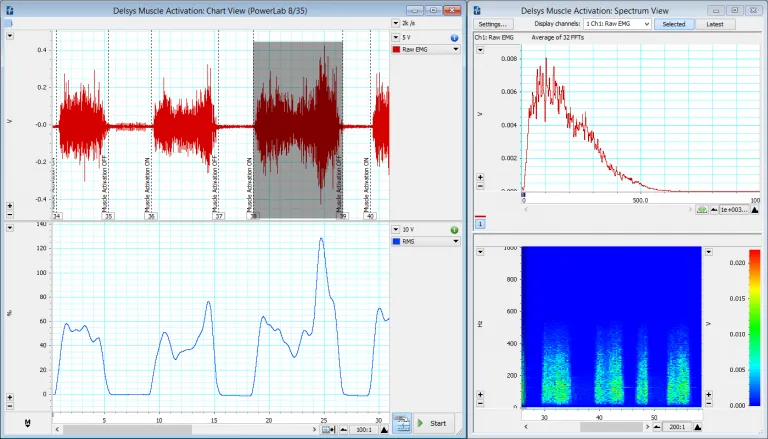
EMG
Signal
Electromyography (EMG) is the study of muscle electrical activity. It is suited to the study of generally any skeletal muscle that can be assessed with surface or intramuscular electrodes.
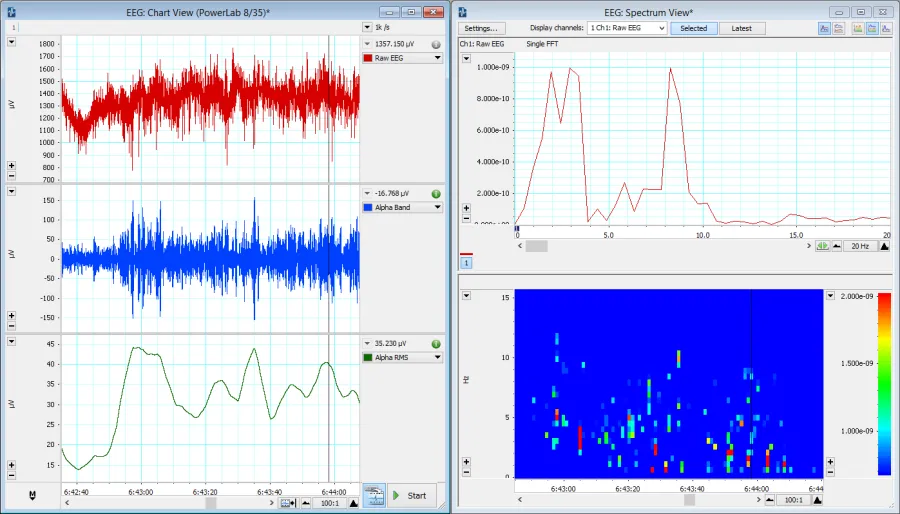
EEG
Signal
EEG Measurement & Analysis Electroencephalography (EEG) is an extracellular recording (<100 Hz) of the electrical activity of the brain. EEG recordings represent the sum of a large amount of underlying neural activity, detected between electrode...
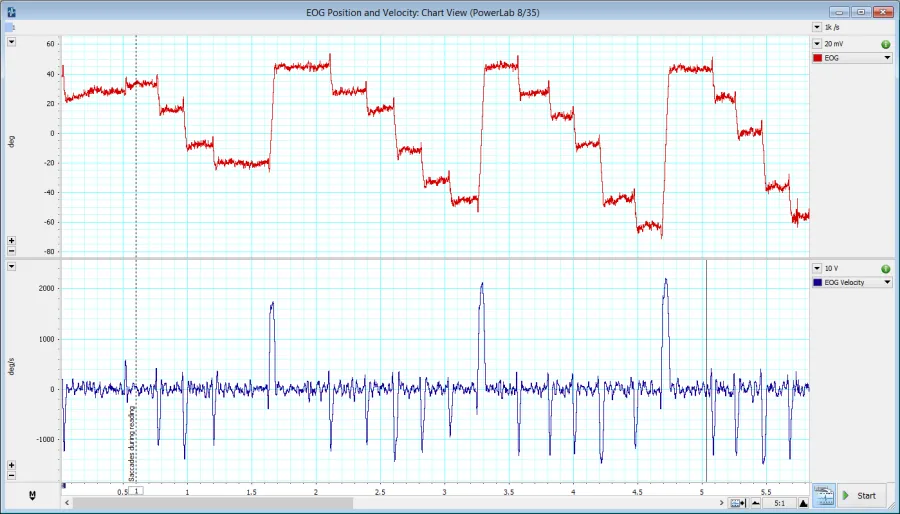
EOG
Signal
Eye movements are controlled by the six extrinsic muscles of each eye; these muscles allow the eyes to track moving objects or fixate on stationary object while the head moves. Eye movements can be recorded using electrodes placed on the skin near...
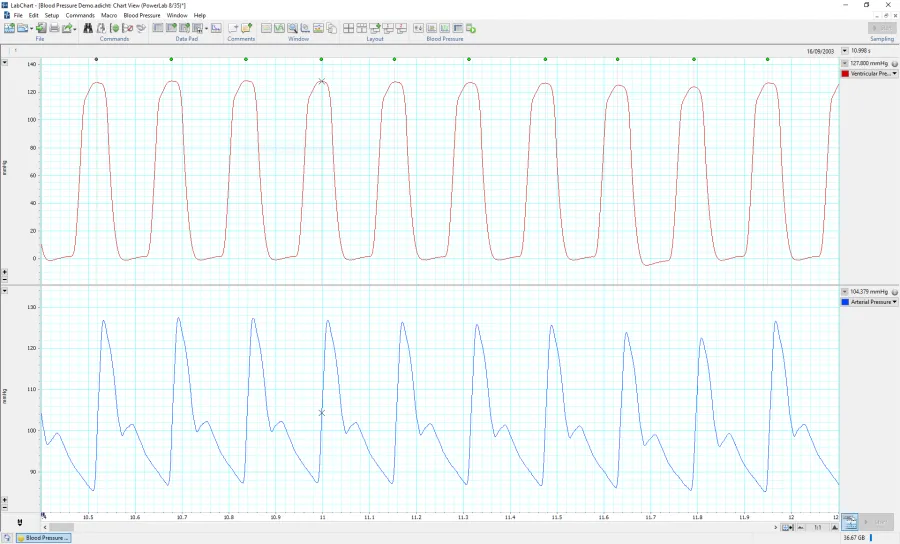
Pressure
Signal
Pressure is the amount of force exerted on the surface of an object per unit area. Typically pressure measurements are useful when describing a fluid contained inside a solid structure.
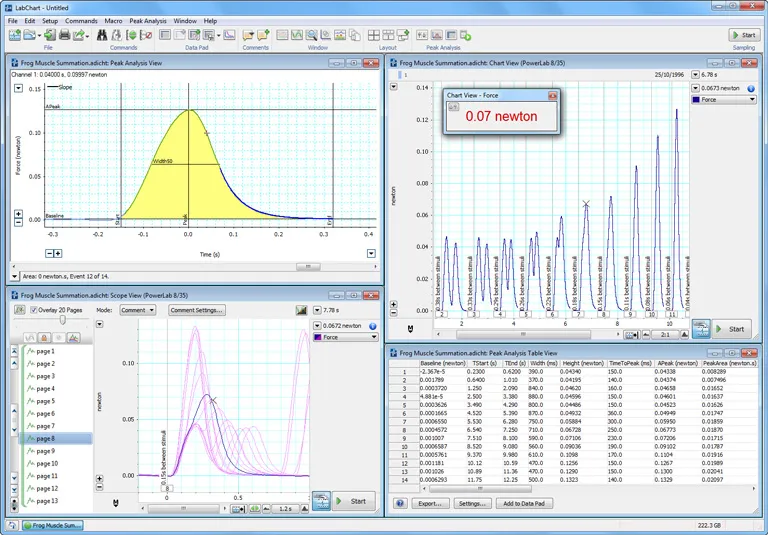
Force
Signal
All muscles are able to contract to generate a force. Whether it be the rings of smooth muscle that regulate the diameter of a blood vessel to control peripheral blood flow in a mouse or the much larger network of skeletal muscles that allow humans...
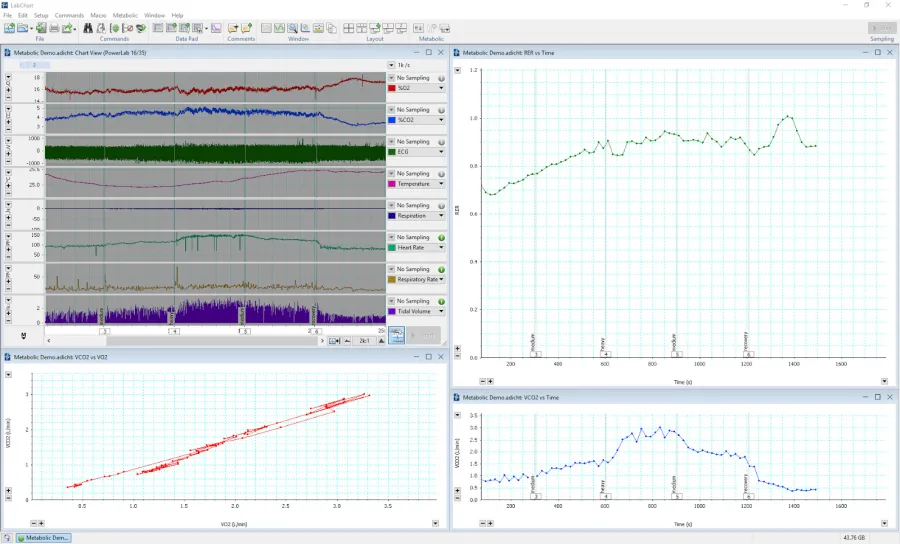
Respiratory Gas Analysis
Signal
Respiratory Gas Analysis is the study of the mixture of gases being inspired or expired by an animal or human subject. The primary gases of interest are typically oxygen and carbon dioxide. The changes in this gas mixture between inhalation and...